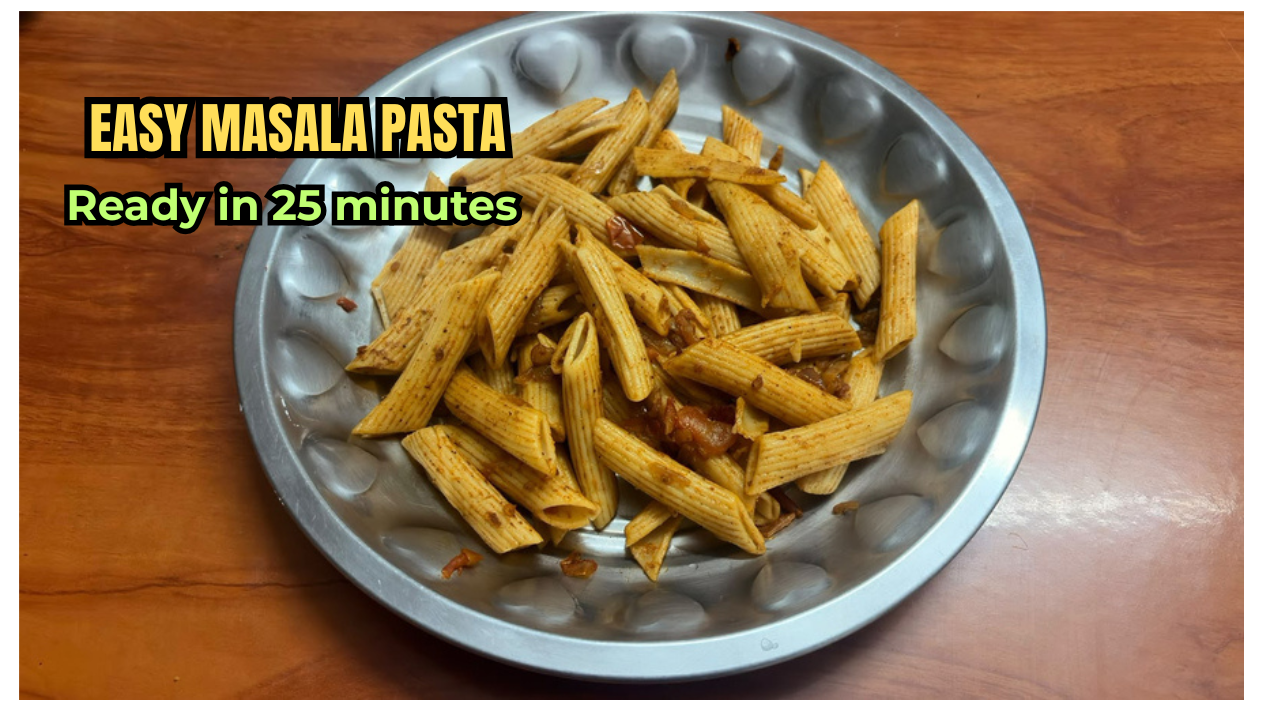
There are days when everyone at home wants something different for dinner. One person wants something spicy, someone else wants something “not rice again,” and you just want a dish that doesn’t take an hour in the kitchen. On days like that, this masala pasta recipe is what I make.
It isn’t the creamy, cheesy kind of pasta you get at restaurants. It’s an Indian-style masala pasta, cooked the way we cook most things at home: start with garlic and onion, add tomato, put in a little spice, and finish with a touch of ketchup. It tastes familiar, it fills you up, and because it’s made with fresh onion and tomato and uses very little oil, it’s a lighter option than most outside food.
This masala pasta recipe makes about one full cup of dry pasta, which is enough for two people to have a medium-sized plate each. If you’re cooking for more people, just double everything.
Why this masala pasta works so well at home
Most of the ingredients are already in your kitchen. Onion, tomato, garlic, chilli powder, and garam masala are things nearly every Indian household keeps on hand. The only extra you need is a packet of pasta, and that’s easy to find in any local store.
The flavor is also very forgiving. If your tomatoes are a little sour, the ketchup balances them out. If you like it spicier, add a pinch more chilli powder. You don’t need to be an expert cook to get this right on the first try.
Ingredients (serves 2)
For boiling the pasta:
- Pasta (penne, fusilli, or macaroni): 1 cup, about 100 grams
- Water: 1 litre
- Salt: 1 teaspoon
For the masala:
- Oil or butter: 1 & 1/2 tablespoons
- Garlic: 5 to 6 cloves, finely chopped
- Onion: 1 medium, finely chopped
- Tomato: 1 large or 2 small, finely chopped
- Red chilli powder: 1/2 teaspoon
- Garam masala: 1/4 teaspoon
- Tomato ketchup: 2 tablespoons
- Salt: about 1/2 teaspoon, or to taste
You can use either oil or butter. Butter gives a richer, slightly restaurant-style taste, while oil keeps it lighter. If you want the best of both, use 1 tablespoon of oil with a small piece of butter.
How to make this masala pasta recipe
Step 1: Boil the pasta
Bring 1 litre of water to a boil in a large pot and add 1 teaspoon of salt. Add the pasta and cook for about 8 to 10 minutes, stirring once or twice so it doesn’t stick to the bottom. The pasta should be soft but still slightly firm when you bite into it. Drain the water and keep the pasta aside.
A small tip here: before you drain it, save about a quarter cup of the pasta water. If the masala turns out too dry later, a few spoons of this water will bring everything together nicely.
Step 2: Roast the garlic lightly
Heat a kadai or wide pan on medium flame and add the oil or butter. Once it’s hot, add the chopped garlic. Stir it for about 30 to 40 seconds until it turns light golden and the kitchen starts smelling of garlic. Don’t let it go dark brown, or it will taste bitter.
Step 3: Cook the onion
Add the chopped onion and sauté until it turns soft and golden. This usually takes 3 to 4 minutes. Take your time with this step, because properly cooked onion gives the masala its natural sweetness.
Step 4: Add tomato and salt
Now add the chopped tomatoes along with the salt. The salt helps the tomatoes break down faster. Keep stirring and cook for 3 to 4 minutes until the tomatoes turn soft and mushy and blend in with the onion.
Step 5: Add the spices
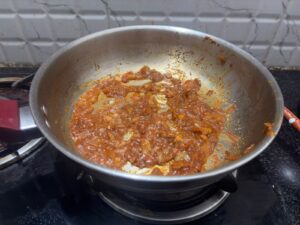
Sprinkle in the red chilli powder and garam masala. Mix well and cook for 1 to 2 minutes on medium flame, until the raw smell of the spices goes away and the masala starts to look slightly glossy.
Step 6: Add the ketchup
Add 2 tablespoons of tomato ketchup and stir it into the masala. Cook for another minute or two. The ketchup adds a mild sweet and tangy flavor that kids especially love, and it coats the pasta well.
Step 7: Add the boiled pasta
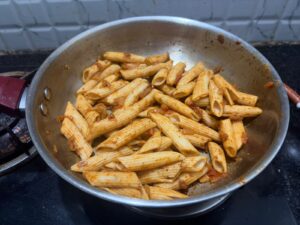
Add the boiled pasta to the pan. Toss and mix gently so every piece gets coated with the masala. Use a light hand while stirring so the pasta doesn’t break. Cook on low flame for 2 to 3 minutes. If it looks dry, add a few spoons of the pasta water you saved earlier.
Step 8: Serve hot
Turn off the stove, give it one last gentle mix, and serve the masala pasta hot, straight from the pan.
A few tips for the best result
- Don’t overcook the pasta while boiling. It will cook a little more in the masala, so it’s better to take it out when it’s just done.
- Chop the garlic, onion, and tomato before you start. Once the pan is hot, everything moves quickly.
- Keep the flame on medium throughout. High heat can burn the garlic and spices before the onion and tomato are cooked.
- Taste before serving. Ketchup already contains salt, so check the seasoning at the end and adjust only if needed.
Making it a little healthier
This masala pasta is already lighter than most packaged or restaurant versions because there’s no cream or cheese and only a small amount of oil. If you want to make it even healthier, try these simple changes:
- Use whole wheat pasta instead of regular pasta. It keeps you full for longer.
- Add more vegetables like carrot, sweet corn, green peas, or beans. Chop them small and add them right after the tomatoes have softened.
- Use oil instead of butter, and cut the ketchup down to 1 tablespoon if you’re watching your sugar.
What to serve with it
Masala pasta is filling enough to be a full meal on its own. If you’d like something on the side, a simple cucumber and onion salad with a squeeze of lemon goes well with it. For an evening snack, serve it with a cup of hot tea or a glass of buttermilk.
Storing leftovers
If you have some left over, store it in an airtight container in the fridge for up to one day. When reheating, sprinkle a little water over it and warm it on low flame so the masala pasta doesn’t dry out. It also makes a good lunchbox meal for kids, since it tastes fine even after it cools down a bit.
Once you’ve made this masala pasta a couple of times, you’ll find yourself adjusting it to your own taste: a little more spice one day, extra vegetables another. That’s the beauty of a home recipe. It doesn’t have to be perfect; it just has to taste good to the people you’re cooking for.
Did you love this quick recipe? Check out my healthy morning routine favorite, the traditional Karuppu Ulundhu Kanji Recipe right here!
